
 ChatGPT
 Claude
Inside This Article
- Does Your Concept Fit Your Location?
- Who Should Communicate Your Launch?
- What Does Launch Week Actually Look Like?
- What Happens After the Hype?
- 3 Things We’ve Learned From F&B Launches
Key Takeaways
- Location demographics beat foot traffic. An authentic Indian restaurant in Khawaneej or an expat-focused cafe in Bani Yas will struggle regardless of how good the food is.
- Launch your restuarant for your radius, not the city. Animo hit 400+ customers in week one with zero ad spend by targeting the offices next door.
- Google Maps is a survival system, not a set-and-forget listing. Denny’s breakfast searches at one branch went from 269 to 2,692 in six months.
- Slow periods are hidden revenue, not dead time. Estabena’s breakfast push drove 455+ conversations at AED 7 per lead from their existing audience.
- 10 repeat customers beat 50 one-time visitors. Dialed-in positioning that brings people back beats viral reach that fades by week three.
 Does Your Concept Fit Your Location?
Before spending anything on marketing, one question worth asking: does your menu match the people who are actually around you?
This sounds obvious. It’s not.
Don’t open an Indian restaurant in Khawaneej unless the menu is dialed down for the local population. The expat audience isn’t there. Don’t target expats for a cafe in Bani Yas, that’s a local market. The demographics don’t support it.
Format matters too. Selling fried chicken at a low price point? You’re competing with KFC and every cafeteria in the city. A single dine-in location might not be the play. Maybe cloud-kitchen with multiple delivery zones makes more sense, different from what everyone else is doing, and built around the gap you’re actually filling.
This is where most restaurant launches fail. If the concept does not fit the location, no amount of restaurant marketing can fix that.
Who Should Communicate Your Launch?
There are more than 20,000+ restaurants in Dubai. If they were all targeting everyone, they would all be shut. Your restaurant is not for everyone. That’s the point.
The team you hire to run your launch needs to understand this. Their job isn’t maximum reach. It’s getting you in front of the right 500 people, not a random 5,000.
Who are you actually for? What do you want to be known for? What makes you the obvious choice for that specific audience?
Once that is clear, the restaurant branding follows, logo, color palette, typography that matches your audience. The brand language follows, how you speak, what tone, what energy. Menu photography and packaging reinforce the positioning. Then content. Then influencers. Then ads.
Going viral is not the goal. Being famous in your niche is.
What Does Launch Week Actually Look Like?
Two restaurants. Two neighborhoods. Same principle.
 The office crowd
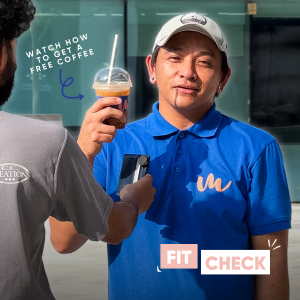
A coffee shop opening in Dubai Silicon Oasis came to us with a quote from another agency. AED 45,000 for the standard launch package, influencers, paid ads, campaign management.
That playbook works in places where people travel to eat. Marina. Downtown. JBR. But Dubai Silicon Oasis isn’t a dining destination. It’s office parks and apartment buildings.
The opportunity wasn’t getting foodies to visit once. It was becoming the daily habit for the thousands of people already within walking distance.
We skipped the influencer blitz. Built a hyperlocal strategy instead, content that spoke to the morning commute, targeting that focused on the immediate radius. “Show your DSO ID card, get a free coffee.” The offer spread through office WhatsApp groups without any ad spend.
400+ customers in week one. Zero ad spend. And more importantly, repeat customers from day one.
The neighborhood
Desi Deli launched in Karama, a neighborhood where customers know exactly what things should cost.
The restaurant had great interiors, noticeably better than most spots in the area. But interiors alone don’t fill tables. The real draw was the price point on specific items, quality food at prices that made sense for Karama.
We worked with influencers who already covered the area. Creators known for highlighting deals and hidden gems, not luxury dining. The positioning we crafted matched the neighborhood. Not “premium Indian cuisine,” quality at a great price.
The launch outperformed everything the owners expected. They generated 300% more customers than projected, and had to restock supplies 5 times in a single week.
Months later, that positioning is still working. When the owners ask customers how they found the place, the answer is almost always the same. An Instagram reel. A TikTok creator. Six months after launch, 1 in 3 customers still say they came directly from an Instagram or TikTok video.
The common thread
The customers who stick around are usually the ones closest to you. Not the ones who drove 30 minutes because they saw a viral reel. The goal isn’t maximum reach. It’s reaching the people most likely to come back.
What Happens After the Hype?
10 repeat customers from dialed-in positioning are worth more than 50 one-time visitors from a viral moment. Launch gets attention. What happens in months 2-6 determines whether you survive.
Google Maps
This is where high-intent customers find you. “Breakfast near me.” “Pakistani restaurant Marina.” When someone searches like this, they’re ready to eat right now.
Most restaurants set up their profile once and forget it. Outdated photos. Ignored reviews. They become invisible when visibility matters most.
What ongoing looks like: responding to every review within 48 hours, posting weekly updates, adding new photos monthly. Google rewards activity. We did this for Denny’s across 5 locations, breakfast searches at one branch went from 269 to 2,692 in six months.
Content consistency
Not just posting frequency, consistency in what works.
Find the hooks, pacing, and visual style that perform for your audience. Then repeat it. Instagram rewards patterns. The algorithm starts working for you when you stop chasing trends and start building a system.
This is what we do with Nayaab Haandi. Same storytelling structure, same energy, adjusted for each campaign. The content compounds instead of starting from scratch every week.
Community management
DMs answered same-day. Comments responded to. Daily Stories. Re-shares never missed. Complaints never ignored. Conversations happening. A quiet comment section signals a quiet restaurant. An active one signals a place worth visiting.
Slow period tactics
Every restaurant has dead hours. Tuesday nights. 3pm lulls. Summer months when residents leave.
The fix isn’t blanket discounts. It’s identifying what your audience doesn’t know you offer and targeting them specifically. We did this for Estabena. Great dinners and packed weekends, but mornings were quiet. When we looked at the data, existing customers didn’t even know they served breakfast. The opportunity wasn’t new customers. It was a time slot hiding in plain sight. We shot scroll-stopping breakfast content, UGC reels, premium visuals, real morning energy. Then ran targeted lead gen ads to their existing audience.
455+ conversations from a single ad. Cost per lead: AED 7. Breakfast became a revenue driver.
The shift
| Metric | Launch Phase | Ongoing Phase |
|---|---|---|
| Goal | Awareness | Retention |
| Audience | Broad reach | Loyal base within radius |
| Approach | Hyperlocal launch targeting | Systems: lead-gen, spotting the gap |
| Proof point | Animo: 400+ customers week one, zero ad spend | Estabena: 455+ conversations at AED 7 per lead from a hidden breakfast slot |
The restaurants that survive past month six aren’t the ones with the best launch. They’re the ones with systems that keep running after the hype fades. For more on ongoing marketing, see our full breakdown on restaurant marketing strategy.
 3 Things We’ve Learned From F&B Launches
1. Location fit beats foot traffic. A perfectly located restaurant with the wrong menu for the area will struggle. A slightly hidden spot with dialed-in positioning will build regulars.
2. Launch for your radius. The customers who become regulars are usually the ones who live or work nearby. Broad influencer reach brings visitors. Hyperlocal targeting builds a base.
3. Viral is overrated. Fame among your niche compounds. Fame among strangers fades. The goal isn’t to trend for a week. It’s to become the obvious choice for a specific audience.
Preparing to launch? Connect with our team, send us a message on WhatsApp. Or check our 5-star reviews from restaurant clients across Dubai.
FAQs
Need Similar Results for Your Restaurant?
Explore our specialized F&B services:- → Restaurant Social Media Marketing
- → Restaurant Branding Services
- → Grow Your Restaurant Sales in Dubai