
 ChatGPT
 Claude
In 2019, Asian Wok was a new restaurant in a small unit in JLT. It had a logo and the start of an identity. The rest of the brand still had to be built. Donut Media came in as Asian Wok’s brand and social media team, and stayed for five years.
Over those years, Asian Wok opened in Mall of the Emirates, Deira City Centre’s Food Central, Fujairah City Centre and Zahia City Centre. The brand grew with it, one product, box and campaign at a time. A restaurant brand keeps getting built long after launch. Here’s how we built Asian Wok’s.
Inside This Article
- What does it look like when one agency builds your restaurant brand?
- How does a free side become a product line?
- Can packaging change what customers order?
- How do you brand a restaurant for the malls?
- How do you keep customers coming back, and reach new ones?
- What Donut Media’s Asian Wok work teaches about restaurant branding
- FAQs
Key Takeaways
- AED 35 to AED 60: average delivery-app order while the 3zeema gathering box ran.
- 100 bottles sold out in 1 day: Asian Wok’s chili oil at AED 20, then 10 to 15 a day per location.
- 1,000 delivery flyers brought in around 1,200 signups for direct ordering, and about 50% ordered.
- 250,000+ views on the Wok Box Man campaign, including 50,000+ on a teaser with zero ad spend.
- Brand books, packaging, sauce bottles, gift boxes, flyers, a web game and two video skits, all designed by Donut Media’s brand development team.
What Does It Look Like When One Agency Builds Your Restaurant Brand?
Many restaurants hire one agency for design and another for social media. That split puts the people who hear from customers in a different company from the people designing for them.
At Asian Wok, Donut Media did both, and the two sides fed each other. Our social team heard what customers were saying. Our brand development team turned it into something customers could hold. We started from Asian Wok’s existing logo and identity, then added to it year after year. Every box, bottle and flyer we designed was built on that foundation.
Many of the ideas came from Donut Media: the 3zeema gathering box, a game hidden in delivery bags and two video skits. Others came out of brainstorms with Asian Wok’s General Manager, Parthesh.
“They come up with their own original ideas when given a brief and execute well.”
Parthesh, General Manager, Asian WokThe clearest example of the two teams working together started with something Asian Wok gave away for free.
How Does a Free Side Become a Product Line?
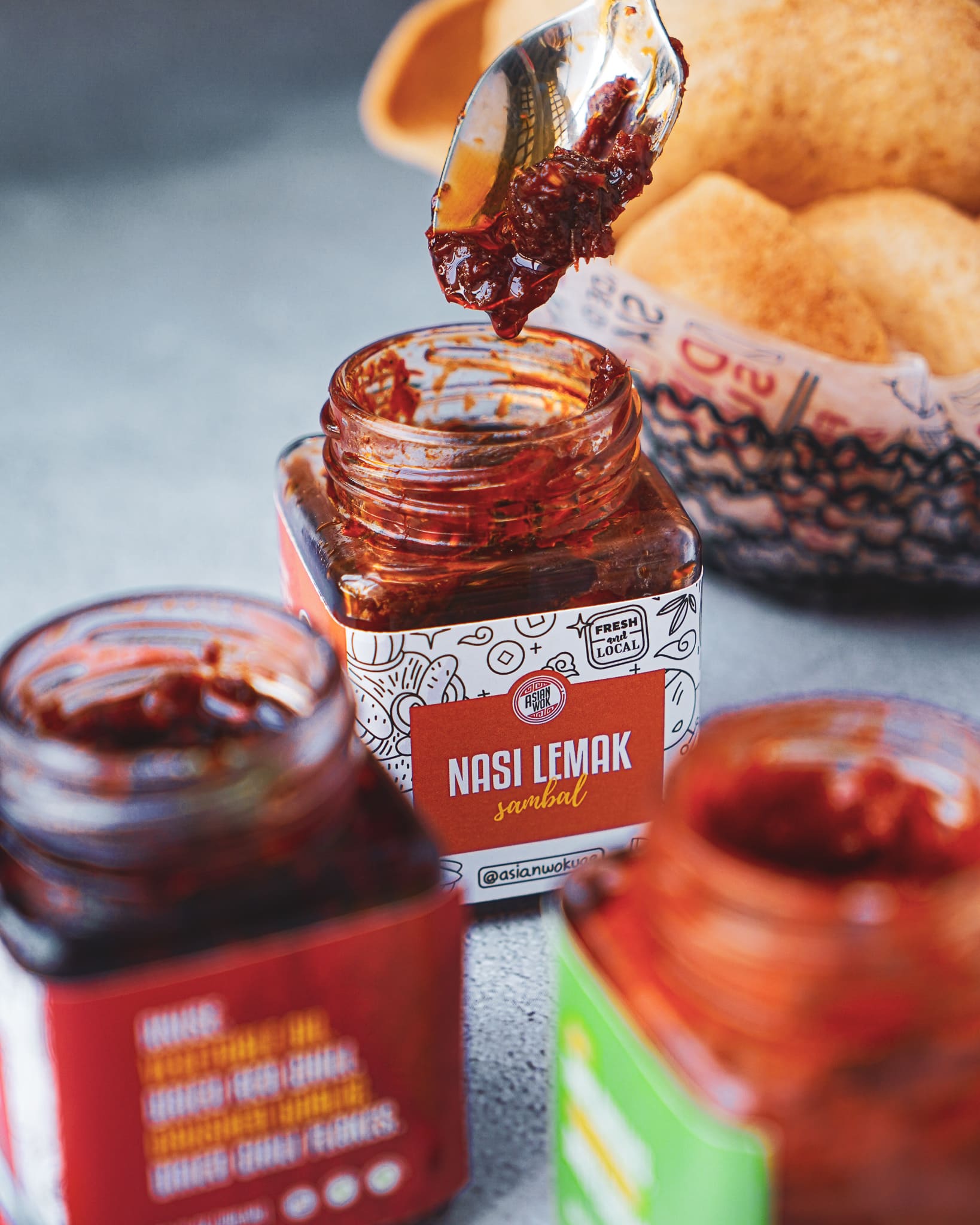
Every Asian Wok order came with a free side of chili oil. Then Asian Wok’s Instagram comments and DMs started asking the same question: where can I buy this?
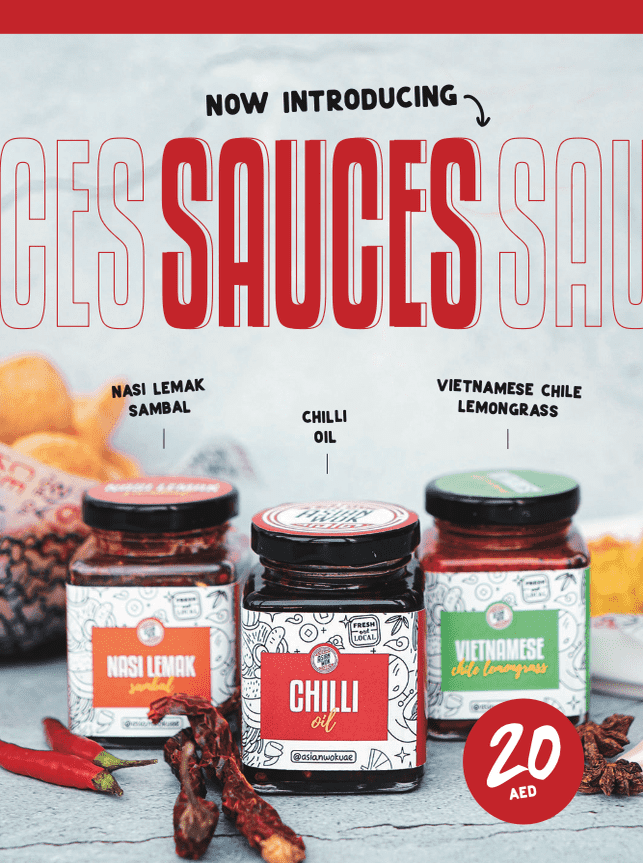
Our social team flagged it to the client. Parthesh wanted to do something about it too. In the next brainstorm, we agreed to sell it. Parthesh created 2 new flavours to sit alongside the original. Our brand development team designed a bottle for each one, with each label reflecting its flavour.
At AED 20 a bottle, the first batch of 100 sold out in 1 day. After that, each location sold 10 to 15 bottles every day. For a low-cost item outside Asian Wok’s main business, that’s a strong new revenue line. Customers had already chosen the product. The branding gave it a shelf. The bottles showed what packaging can do when it has a clear job. The next box we designed had a bigger one.
Can Packaging Change What Customers Order?
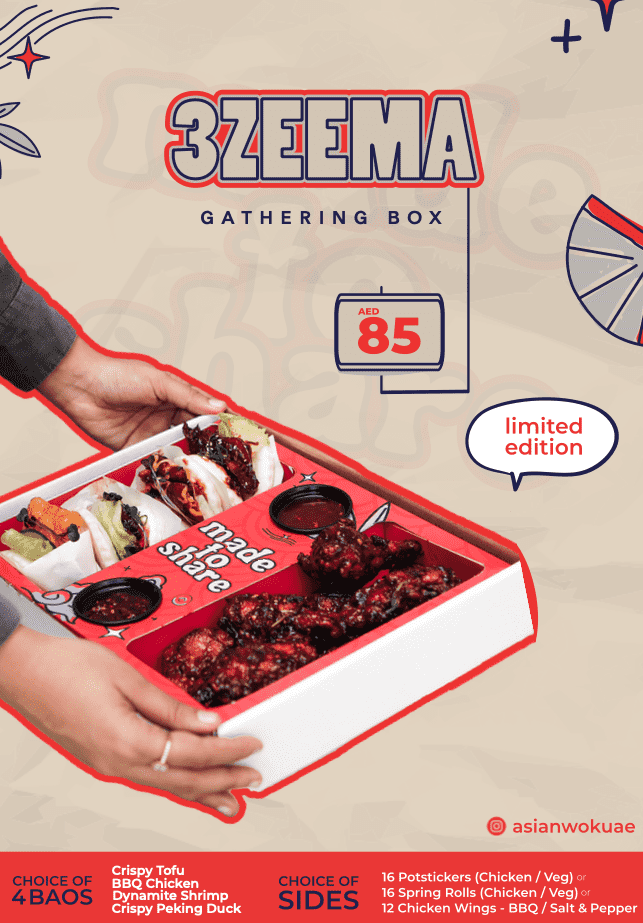
Most Asian Wok orders were one person ordering lunch. On delivery apps, the average order sat around AED 35. We wanted to reach a different customer: groups.
So Donut Media created the 3zeema box. 3zeema means a gathering in Arabic. It’s a sharing box of starters (wings, bao, chili bits) priced at AED 60 to 80, pairing Asian Wok’s higher-margin items with the bestsellers people already ordered.
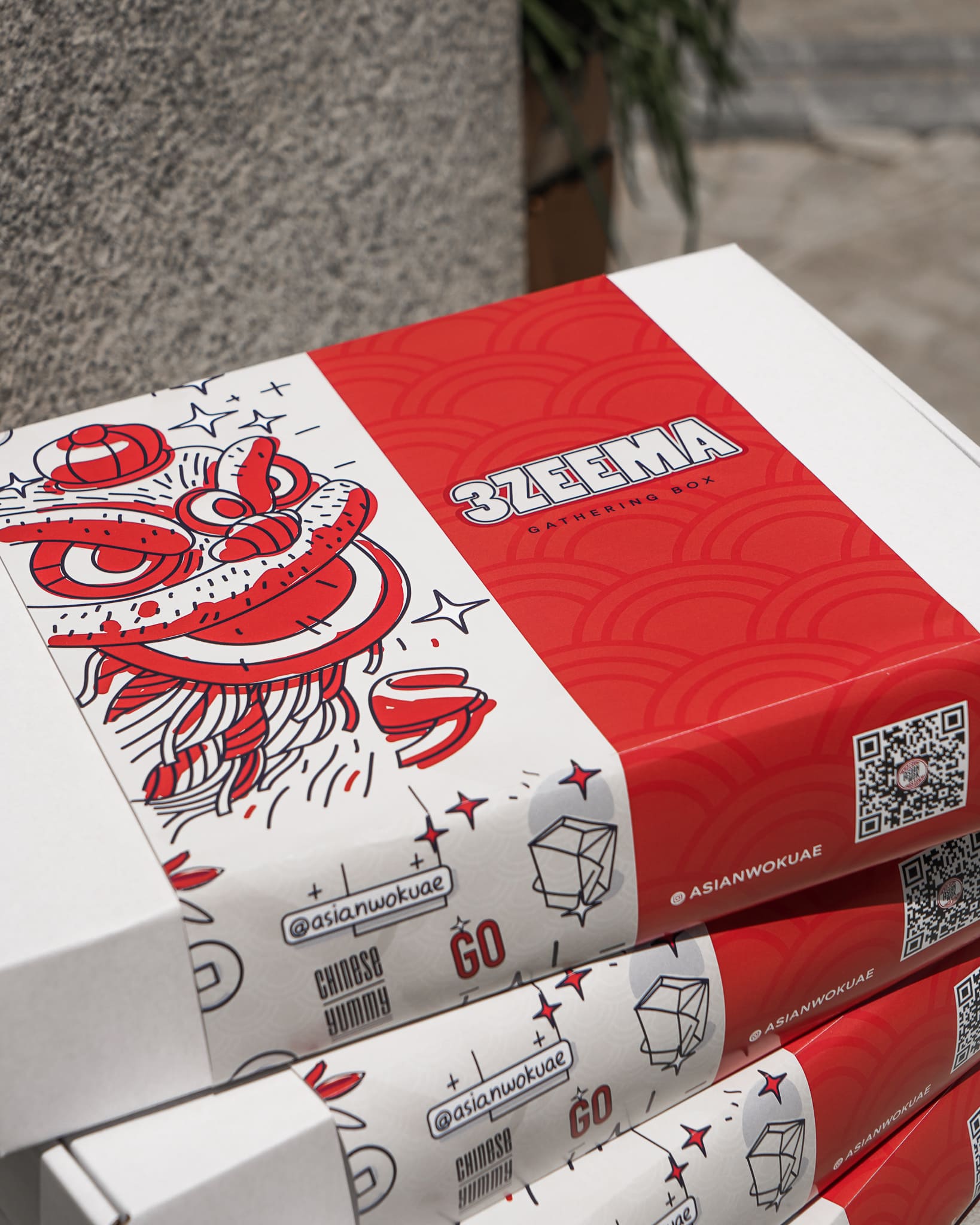
There was one problem. Asian Wok had no packaging for an order that size, and a custom box would have cost too much. The answer was already in storage. Asian Wok had boxes left over from Ramadan, when it sent out iftar meals with dates and water.
We suggested reusing them with a printed sleeve on top. Our brand development team designed the sleeve, and in bulk it cost as little as AED 0.50 a box. A leftover Ramadan box became a branded sharing product.
While it ran, the average order on delivery apps rose from AED 35 to AED 60. As Asian Wok grew, the brand needed to win over a new audience too.
How Do You Brand a Restaurant for the Malls?

Moving into malls meant pitching to leasing managers, the people who decide which brands get space. So Donut Media built Asian Wok’s brand book. It took the existing logo and identity, added the elements we had developed over the years, and turned them into one document Asian Wok could take into those meetings.
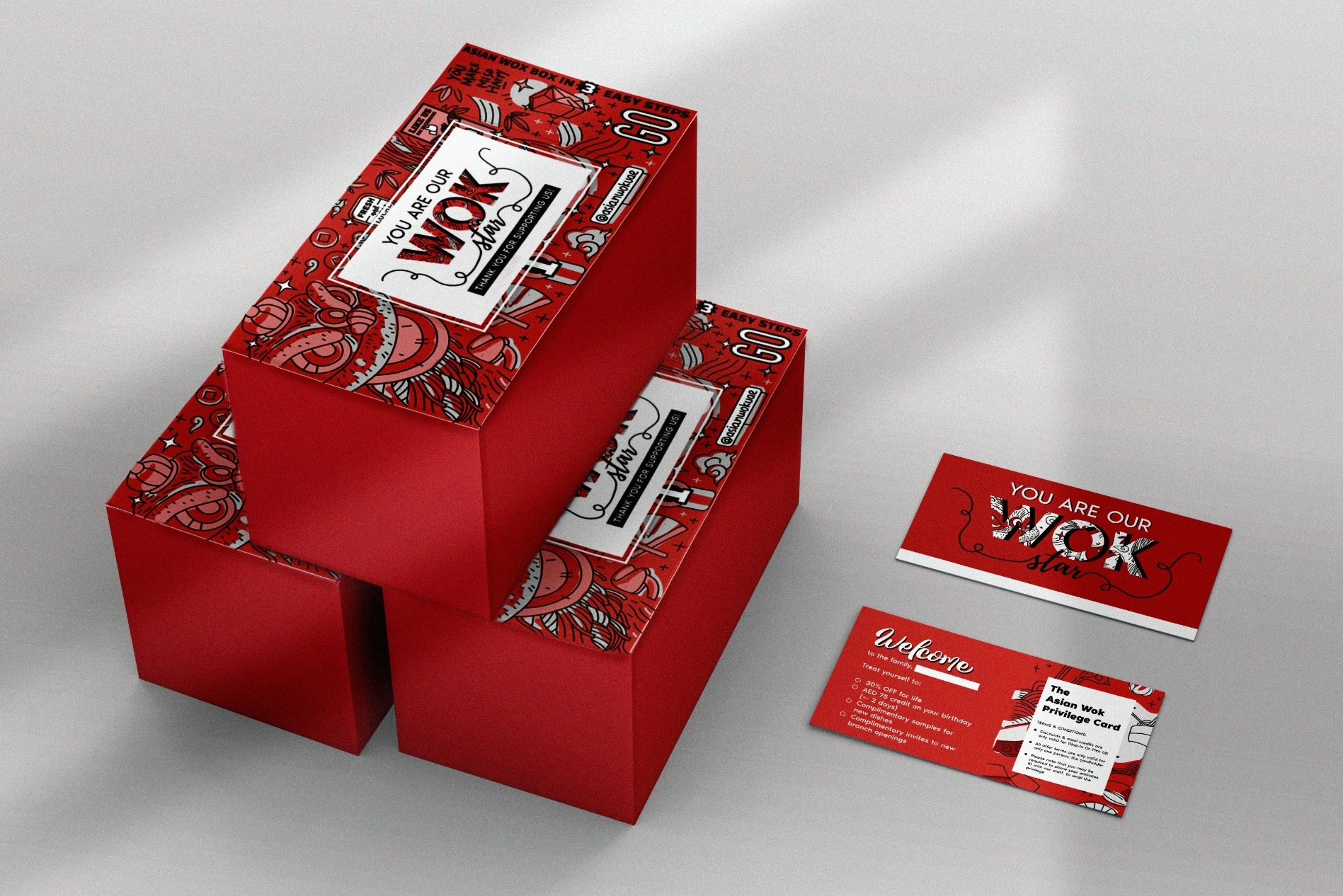
During COVID, Asian Wok wanted to strengthen its relationships with VIP customers, the influencers it had worked with, and leasing managers across the malls. Asian Wok set the brief. Donut Media designed every piece inside the Wok-star box:
- a custom face mask, for the year everyone wore one
- a bottle of the chili oil that started as a free side
- custom chopsticks
- a card giving the holder 30% off for life


The box put the brand customers saw at the counter in front of the people who decide where it opens next. It went to VIP customers, influencers and leasing managers. Malls were one audience. Customers who had already ordered were another, and they needed reasons to come back.
How Do You Keep Customers Coming Back, and Reach New Ones?
The delivery bag
Every delivery order landed in a customer’s home. So we started using the delivery bag to talk to them. For UAE National Day and Chinese New Year, Donut Media designed greeting flyers for every order. Just a greeting from Asian Wok on the days its customers were celebrating. Inside the restaurants, the tray mats changed with every campaign, so dine-in regulars saw something new too.
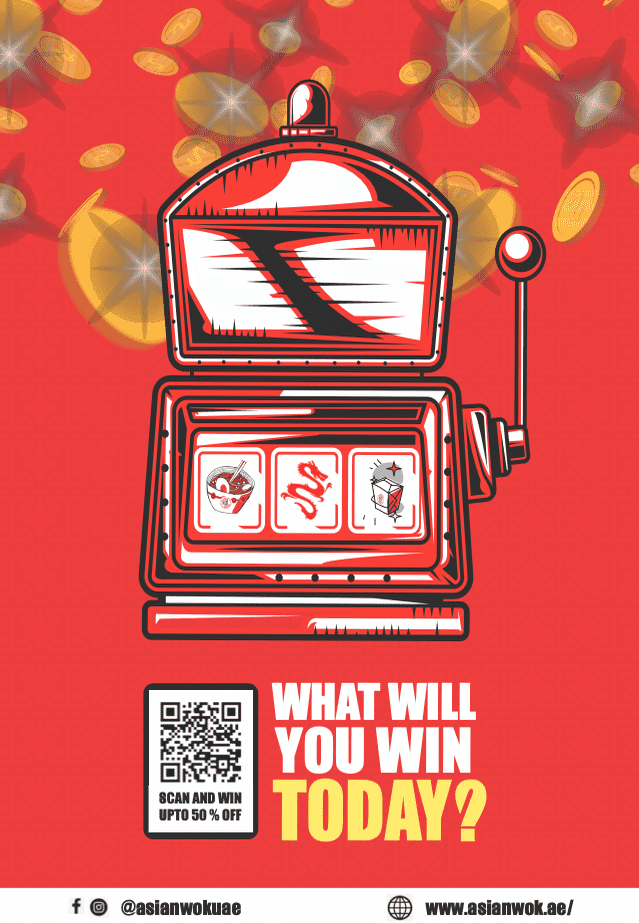
Then we gave the bag a bigger job. Most orders came through delivery apps. We wanted some of those customers ordering directly from Asian Wok. So we built a web game. A QR code on a flyer in the delivery bag. Scan it, enter your details and press the button. If the symbols line up, you win a discount you can only use on Asian Wok’s own ordering channel.
1,000 flyers went out. Around 1,200 people signed up, because customers shared the flyer with friends. About half of them placed an order on Asian Wok’s own channel. That’s around 600 customers who moved from an aggregator app to ordering direct, and every direct order is one the aggregator takes no commission on.
The video skits
The delivery bag only reached people who had already ordered. Reaching new people was a job for Asian Wok’s social media, which our social team ran alongside the brand work. Most restaurant feeds are dish after dish. So we wrote skits that put the Asian Wok brand in front of people as entertainment.
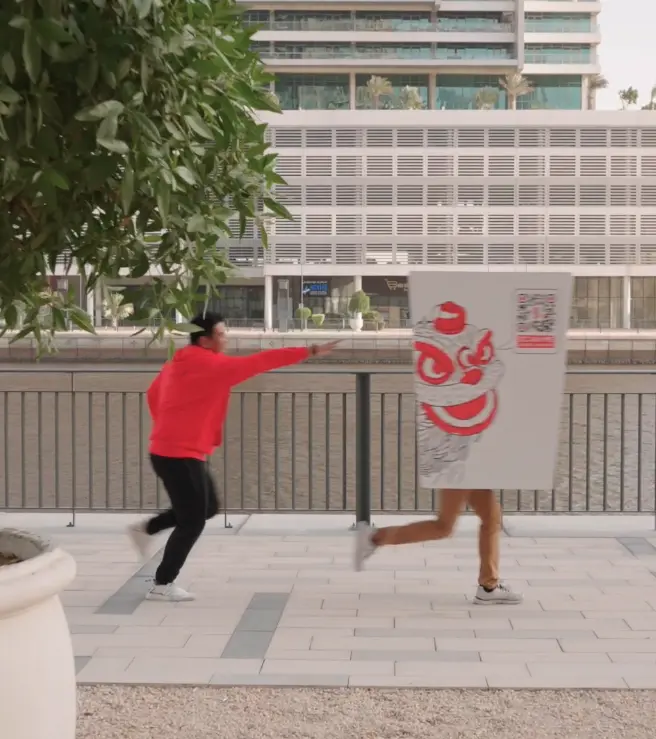
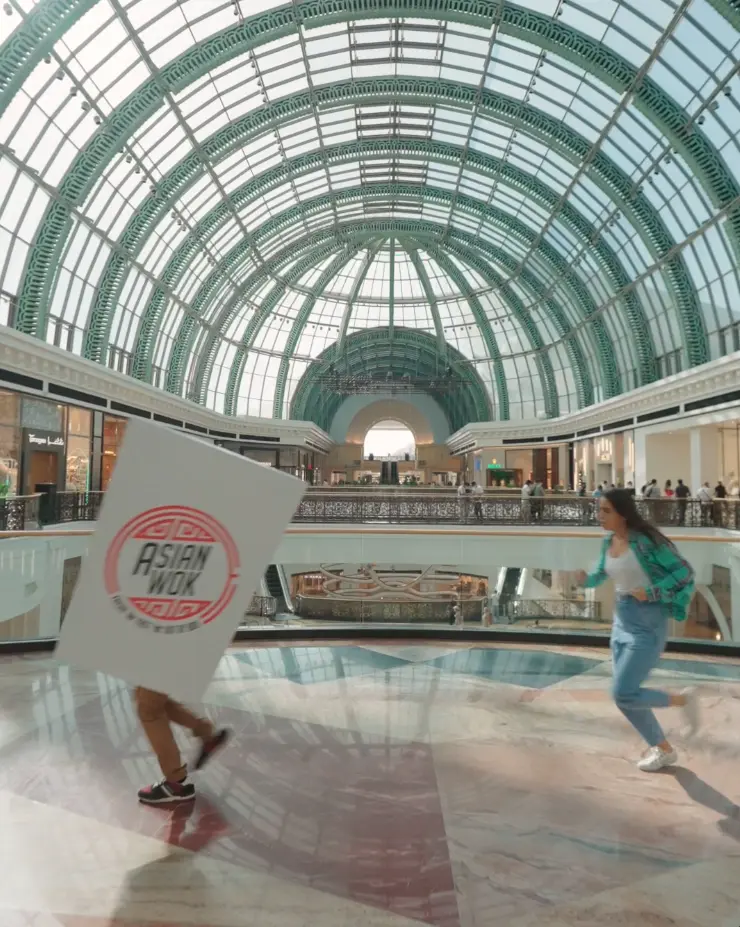
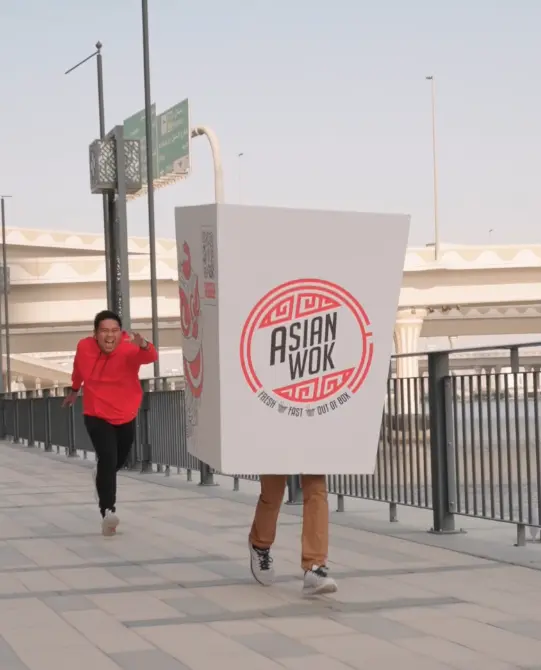
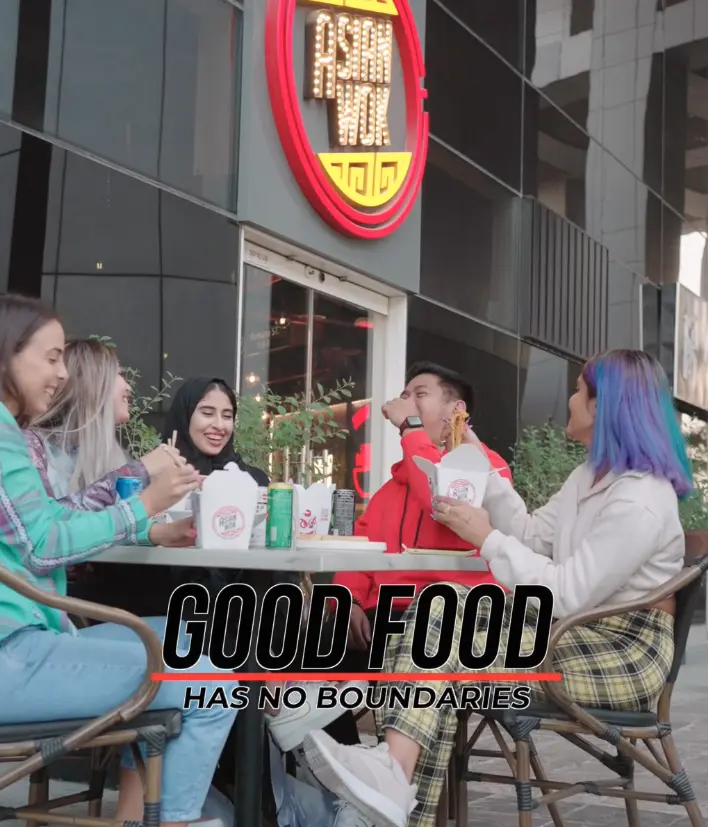
The first started with a teaser. With zero ad spend, it pulled 50,000+ views because the idea was funny enough to share. Then came the full skit. Five influencers chase a man wearing a giant wok box across Dubai. When they finally tackle him, they discover he’s the Asian Wok chef. It ends with all of them eating together. It reached 200,000 views in the first week, and 250,000+ views and 100+ comments across the campaign.
The second skit brought the dragon from Asian Wok’s packaging to life. Someone in a dragon costume dances through the restaurant and eats the food with no table manners at all. Both skits gave Asian Wok a personality people could remember.
What Donut Media’s Asian Wok Work Teaches About Restaurant Branding
A free side became a product. A leftover Ramadan box became a sharing box that changed who ordered. A brand book went into the mall pitches. A dragon stepped off the packaging and into a video. That’s what building a brand after launch looks like. Here’s what we took from it.
1. Listen to your customers before you brainstorm. Comments, DMs, reviews, and what staff hear at the counter. Asian Wok’s next product was already being asked for. If customers keep asking for something you give away, it’s ready for a label.
2. Design for the order you want, not the one you get. Solo lunches kept the average at AED 35. A box designed for groups changed who was ordering.
3. Treat every touchpoint as brand space. A delivery bag, a tray mat, a flyer. Change them with every campaign and regulars see something new on every visit.
FAQs